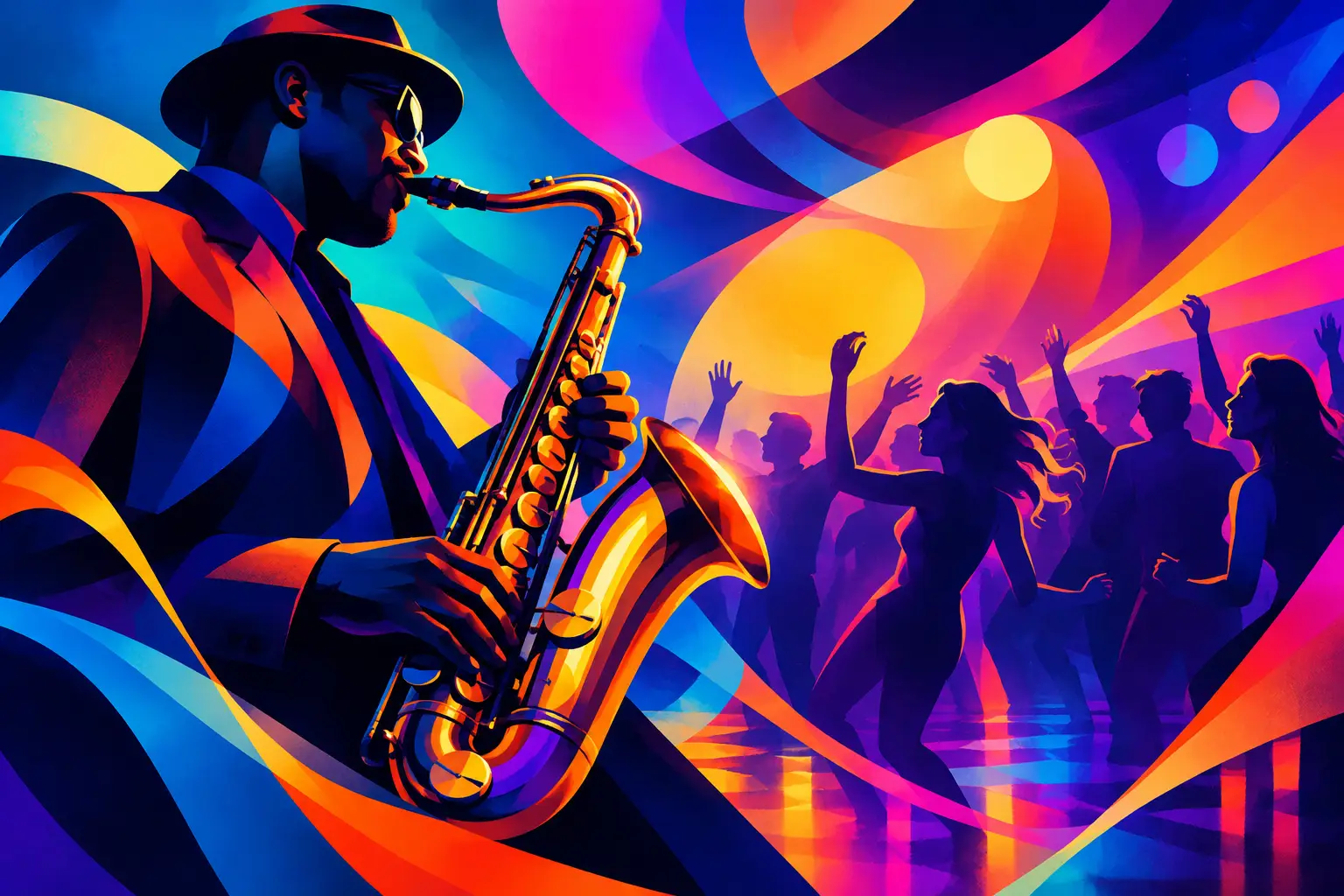
A great club night has a point where the room changes. The DJ has built the rhythm, the lights are working, and then a live player steps into the crowd with a saxophone line that cuts through a familiar anthem. That is what live sax for club night is all about: taking a strong DJ set and giving people a reason to look up, cheer and stay on the dancefloor.
It is not about turning a club into a jazz concert. Done properly, live sax is improvised, high-energy and fully led by the tracks, the room and the moment. From Ibiza house and disco to commercial dance, R&B and club classics, the sax should feel like part of the set rather than an interruption to it.
Why live sax changes the atmosphere
A DJ can read a room brilliantly, but a live saxophonist adds a visible focal point. Guests do not just hear the drop or the chorus – they see someone creating a moment in real time. That makes a difference at launch nights, busy weekend sessions, ticketed parties and private club-style celebrations where you want the entertainment to feel more special than a standard playlist.
The strongest results usually come from recognisable dance tracks with room for a big melody, a rolling vocal hook or an instrumental lift. Think house, funky disco, Ibiza-inspired dance music and selected pop remixes. The saxophone can rise over a build-up, answer a vocal line, then disappear again before the next transition. It gives the music texture without asking the crowd to change gear.
There is also a practical benefit for venues. A live set gives you something people will film, share and talk about after the night. For a pub, bar or club trying to stand out in a crowded local calendar, that can make a regular DJ event feel like an occasion worth returning to.
Live sax for club night: choose the right setup
The best setup depends on who is already involved and how the night needs to run. If you have booked a DJ you trust, adding sax is normally the simplest route. The DJ keeps control of the musical direction while the saxophonist performs over selected tracks at the moments that matter most. There is no need to rebuild the whole entertainment plan.
This works especially well when the DJ is comfortable communicating on the night. A quick chat before doors open about genres, key tracks, peak-time slots and any songs to avoid prevents awkward surprises. An experienced sax player will also be used to watching the DJ, reading the dancers and knowing when not to play. Space is as important as sound. A short, perfectly placed sax feature can have far more impact than playing continuously.
If there is no DJ, a speaker-and-sax package can still create a proper party atmosphere. A curated playlist provides the backbone, while live sax adds the performance element. It is a good fit for smaller venues, private hires, rooftop events and occasions where you need a straightforward all-in-one option without arranging separate suppliers.
For bigger rooms or events that need more momentum throughout the night, a DJ-and-sax combination is often the strongest choice. You have proper mixing, crowd response and a live performer working together, with one coordinated plan rather than two acts competing for attention. Ad Sax can also build this into a wider two-piece or live-band package where the event calls for a fuller sound.
Timing matters more than playing all night
One common mistake is assuming live sax needs to run from the first track to the last. It does not. In fact, club nights are usually better when sax appears in focused bursts.
An early set can help establish the feel of the night as guests arrive, particularly if the venue is serving food or drinks before the dancefloor fills. The main performance section is often later, when the room is ready for bigger house records, singalongs and hands-in-the-air moments. A final appearance near closing can give the night one last lift and leave people on a high.
The exact timing depends on the crowd. A younger late-night audience may not hit its stride until well after 11pm. A corporate party or mixed-age celebration may peak earlier. There is no fixed formula, which is why a crowd-aware performer is more useful than someone who arrives with one rigid set list.
Get the sound right before the doors open
Saxophone has enough natural presence to cut through a track, but it still needs proper amplification in a club environment. A professional setup should include a suitable microphone or wireless system, connection to the venue PA or DJ equipment, and time for a soundcheck. This is not the glamorous bit, but it protects the experience.
The sax needs to sit on top of the music, not get lost beneath heavy bass or blast over every vocal. Levels may need adjusting once the room fills, because a near-empty venue sounds very different from a packed dancefloor. If your DJ has a preferred technical setup, share the details in advance. If the venue has its own sound engineer, make sure they know when the live performer is due on.
Space matters too. A saxophonist can perform beside the DJ booth, on a small stage or among the crowd, depending on the venue layout and licensing arrangements. Playing on the dancefloor creates an immediate buzz, but it needs a clear route, sensible cable management and enough room for guests to move safely. Wireless equipment can make this much easier.
Give the music a direction, not a rigid script
You do not need to supply a spreadsheet of 80 songs. A few clear pointers are more helpful: the atmosphere you want, the genres that suit your audience, your favourite tracks and anything that definitely does not belong at your event.
For an Ibiza-style night, that might mean uplifting house, piano classics, vocal dance and disco edits. For a bar event, the brief could lean towards commercial dance, throwback anthems and funky crowd-pleasers. A birthday or private club night may call for a handful of personal favourites worked into a broader party set.
It is worth being realistic about requests. Not every song suits saxophone, and not every popular track needs a live line over it. The best performances leave room for the DJ’s transitions, the original production and the natural energy of the crowd. A good musician will know which hooks are worth highlighting and when to save the big moments.
Plan for the practical details
Club entertainment can be brilliantly simple to arrange, provided the basics are confirmed early. Agree performance times, access and soundcheck time with the venue. Check parking or loading arrangements if equipment is coming in. Confirm whether the performer is expected to bring a PA, whether one is available on site, and who will be the main contact on the night.
If you are promoting the event, tell people there will be live sax. It is a genuine selling point, whether it appears on a poster, social post or booking page. Just keep the promise accurate. If sax is planned for peak-time sets rather than all evening, say so. Clear promotion sets the right expectation and helps build excitement without overcomplicating the message.
Budget will vary according to timings, location, equipment and whether you need a solo saxophonist, DJ partnership or additional musicians. The cheapest option is not always the best value if it leaves you managing separate suppliers, last-minute technical issues or mismatched music. A flexible package with one point of contact can remove a lot of pressure, particularly when you are already dealing with ticketing, staff, guests and venue logistics.
What makes a sax set feel memorable
Technical ability matters, but it is only part of the job. The performer needs to be comfortable around people, alert to the room and confident enough to step forward when the moment calls for it. Club crowds respond to energy. They notice whether a player is enjoying the night, moving with the music and making eye contact rather than standing still in a corner.
After more than two decades of paid performance experience, Adam knows that the biggest reactions rarely come from overplaying. They come from catching the right track at the right time, lifting a chorus everyone knows and making the room feel involved. No problem if the plan shifts on the night – parties do. The aim is to keep the momentum moving in the right direction.
When you are choosing live entertainment for your next club event, start with the crowd you want on the floor and the feeling you want them to remember. Get the DJ, sound and performance times aligned, then leave enough freedom for the live music to respond to the room. Enquire early, share your vision and let the sax provide the moment your guests did not see coming.
Leave a Reply